White Flowers
A pagan carol with a sad social undertone
Scores & Recordings
 Download score (PDF)
 Download recording (MP3)
Recording
Summary
An arrangement of an old Romanian begging song later absorbed into the winter carol repertory, White Flowers surrounds a traditional tune with modal, mildly dissonant harmony. Rather than stressing the text's humor, the piece brings forward its sad social undercurrent, while the choral writing shifts from one stanza to another between monody, polyphony and homophony.
Imprint
| Orchestration | Choir / |
|---|---|
| Lyrics | Traditional Lyrics (Anonymous) / |
| Duration | 2:30′ |
| State | Finished |
| Completed | 2008 |
| Premiered | — |
| Performed by | — |
| Honors | — |
| Copyright | Claudius Iacob |
Program notes
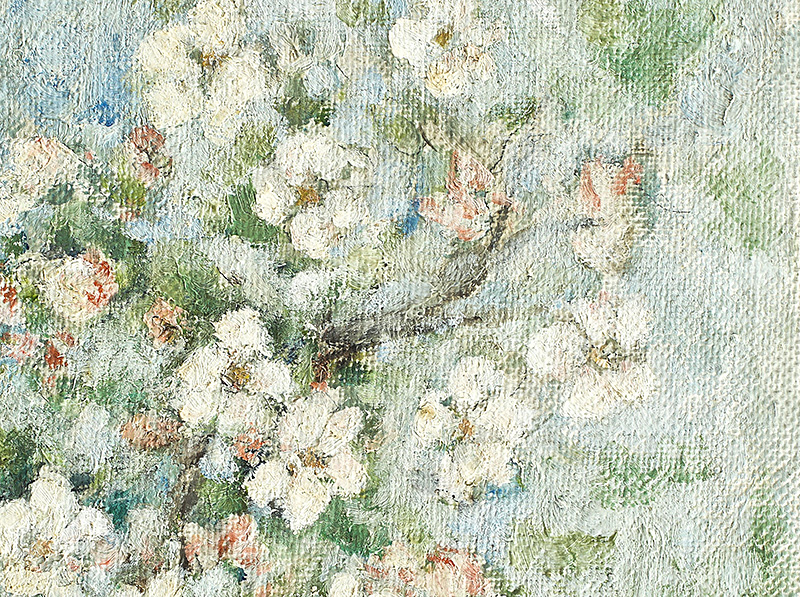
Not exactly a composition, rather an arrangement of an ancient Romanian beggars’ song (or pagan carol, if you will, because this is what carols were, long before they were christened). The text, which was originally sung in the first weeks of spring by wandering bands of unsettled young men, takes a humoristic approach to begging for bread (or any form of food, actually) from the wealthy, settled members of the community. The white flowers, generously mentioned in the chorus are likely apple blossom, and the new year mentioned in the closing lyric must be the new agricultural year, also celebrated in this areal on the same date as the spring echinoctium.
Starting with the fourth century, the 25th of December has been progressively adopted as the day to celebrate the birth of Jesus Christ, first by the West and then by (most of) the Eastern Christian countries. Christian carols begun to appear and be sung before, during and after the Nativity. As it usually happens, a number of pre-christian carols survived, and they get sung today during the Advent, despite the fact of being totally unrelated to it. This is also the case of the present traditional song, which is nowadays considered a Christmas or New Year’s carol in its own right.
I chose a modal, mildly dissonant harmony to wrap the preexisting tune, as it was my intention to focus not on the funny narrative of the text, but rather on the sad (social) substrate it carries — on the fact of having to beg for one’s food. Each stanza makes use of a slightly different texture, going from monodic to polyphonic, homophonic and back.